
If you’ve ever stepped out of a sauna into crisp evening air and felt completely, deeply relaxed, you already understand the appeal. But if you’re thinking about adding one to your home, there’s more to explore than you might expect.
From the different types available and the real health benefits behind the heat, to what ownership actually looks like day to day, this guide covers everything you need to know about saunas (including what to look for when you’re ready to buy one here in Barrie.)
What Is a Sauna, Exactly?
At its simplest, a sauna is a small room or structure designed to produce dry or wet heat for the purpose of relaxation, wellness, and recovery. The experience has been a cornerstone of Finnish culture for thousands of years, and for good reason … it works!
Modern saunas have evolved significantly, but the core idea remains the same: expose your body to elevated heat, let yourself sweat, and emerge feeling refreshed, loosened up, and genuinely calm.
What’s changed is the variety of ways you can achieve that experience.
Types of Saunas: What’s the Difference?
Not all saunas are built the same way, and the differences matter when you’re choosing one for your home.
Traditional Finnish Saunas
This is the original.
Traditional saunas use a wood-burning or electric stove to heat a pile of rocks (called kiuas), which then radiate dry heat throughout the space. Temperatures typically range from 70°C to 100°C (160°F to 212°F), with low humidity unless you pour water over the rocks to create a burst of steam called löyly.
The stove itself comes in two forms.
● Wood-burning heaters deliver the most traditional experience. It’s slower to heat up, but beloved for the ritual of it. There’s something about feeding a fire that makes the whole process feel intentional. They’re also a natural fit for cottages and properties without easy electrical access.
● Electric heaters are the more practical choice for most residential installs, offering precise temperature control and the convenience of preheating remotely before you even step outside.
Traditional saunas are the gold standard for many enthusiasts. The heat is intense, the experience is immersive, and for people who grew up with sauna culture, there’s nothing quite like it.
They also tend to be built from natural materials (most commonly red cedar or spruce), which contributes to the warm, woody atmosphere that makes the experience feel grounding rather than clinical.
Outdoor traditional saunas are a popular choice in Canada, and for good reason. They integrate naturally into backyard and cottage settings, they’re built to handle the climate, and they’re designed for year-round enjoyment.
Infrared Saunas
Infrared saunas work differently. Instead of heating the air around you, infrared panels emit light waves that penetrate the body directly, warming you from the inside out. They typically operate at lower temperatures (45°C to 60°C / 115°F to 140°F). Some people find it more comfortable, though many sauna enthusiasts feel the lower heat doesn’t deliver the same depth of relaxation or the full physiological response that traditional high heat produces.
Infrared saunas are commonly used for muscle recovery and are popular in wellness circles. They tend to be more compact and easier to install indoors, which suits some buyers. The tradeoff is that they lack the authentic sauna experience. There is no steam, no stones, and no löyly. They’re also typically built from engineered materials rather than natural wood, which affects both the atmosphere and the longevity of the unit.
Steam Rooms
Steam rooms are worth mentioning because people often mix them up.
Steam rooms are not saunas. Steam rooms use wet heat with high humidity at lower temperatures, rather than dry heat. The experience is different, the health effects overlap in some ways but not others, and the construction is entirely different.
If you’re shopping for a sauna, a steam room is a separate category altogether.
Outdoor vs. Indoor Saunas
Traditional saunas can be installed either indoors or outdoors, though outdoor installations are by far the most common for homeowners in Ontario.
Outdoor saunas offer more flexibility in sizing, better ventilation, and a more authentic experience. Afterall, there’s just something special about stepping out of a hot sauna into a cool backyard on a winter evening.
Outdoor saunas also tend to come in two popular styles: barrel saunas and cabin saunas. Both deliver the same core experience, but each has its own character.
Popular Outdoor Saunas: Barrel Saunas vs. Cabin Saunas
If you’re shopping for a traditional outdoor sauna in Canada, you’ll likely be choosing between these two designs.
Barrel Saunas
Barrel saunas are cylindrical in shape. (Picture a large wooden barrel lying on its side.) That rounded shape isn’t just aesthetic. The curve actually improves efficiency: hot air rises and circulates naturally within the round interior, which means the space heats up faster and maintains temperature more evenly.
Barrel saunas tend to have a cozy, intimate feel. They’re visually distinctive in a backyard setting, and because they heat up quickly, they’re easy to use on a whim rather than planning an hour ahead.
Cabin Saunas
Cabin saunas have a more traditional rectangular structure. They look more like a small backyard shed with the unmistakable look of a Finnish sauna house.
They also tend to offer more interior space and are often easier to customize with benches, windows, or a changing area. Their design blends more seamlessly into properties that already have traditional landscaping or structures.
Both styles, when built well, deliver an exceptional sauna experience. The choice often comes down to space, aesthetics, and personal preference.
The Health Benefits of Regular Sauna Use
This isn’t just marketing. The research behind sauna use has grown substantially over the past two decades, and the findings are consistently positive. Here’s what regular sessions can actually do for you.
Detoxification Through Sweat
In some cultures, sweating is seen as a natural mechanism for eliminating toxins from the body. Saunas push that process into overdrive in the best possible way. It is believed that the sustained heat encourages deep, prolonged sweating that can help flush out impurities and leave you feeling genuinely cleaner. Not just on the surface, but from the inside out.
Improved Circulation
Heat causes blood vessels to dilate, which increases blood flow throughout the body. This improved circulation helps deliver oxygen and nutrients to muscles and tissues more efficiently, which is why saunas are a popular recovery tool among athletes and active people.
Regular sauna use has been associated with cardiovascular benefits that are, in some studies, comparable to moderate exercise. Not as a replacement for physical activity, but as a meaningful complement to it.
Stress Relief and Mental Reset
There’s a reason people describe stepping out of a sauna as feeling like hitting a reset button. The heat triggers the release of endorphins, which your body’s natural mood elevators. They also give you a dedicated block of time with no screens, no obligations, and no distractions. That combination of physiological and psychological relaxation is genuinely powerful.
Many regular sauna users report improvements in mood, reduced anxiety, and better emotional resilience over time
Better Sleep
The same principle that makes hot tubs helpful for sleep applies here. When your body heats up significantly and then begins to cool down, that temperature shift signals to your brain that it’s time to rest. An evening sauna session (even a short one) can meaningfully improve sleep quality for many people.
Muscle Recovery
If you work out regularly, deal with chronic muscle tension, or spend your days in physically demanding work, saunas offer real relief. The heat relaxes muscles, increases flexibility, and helps reduce soreness after exercise. Many athletes incorporate sauna sessions into their recovery routines as a standard practice.
Social Connection
Like hot tubs, saunas have always been communal spaces.
In Finnish culture, the sauna is where important conversations happen, where families reconnect, and where guests are welcomed. Even in a backyard setting, a sauna naturally becomes a gathering place where meaningful things happen between people.

What Does Sauna Ownership Actually Cost?
Understanding the full cost picture before you buy is always the right move.
The Sauna Itself
Pricing varies based on size, materials, construction quality, and style.
Outdoor cedar saunas built to Canadian standards represent a meaningful investment, but they’re also built to last for decades with proper care. But quality matters here. The difference between a well-crafted sauna and a cheaper model shows up in how well it holds heat, how long it lasts, and how good it feels to use.
The Sauna Itself
Outdoor saunas generally need a stable, level base, whether that’s a concrete pad, compacted gravel, or a reinforced deck. Most also require an electrical connection for the heater (unless you’re going with a wood-burning model).
Working with a dealer who can help you organize delivery and installation removes a lot of the guesswork and ensures everything is set up correctly from day one.
Operating Costs
Ongoing costs for sauna ownership are relatively modest compared to hot tubs. Electric saunas draw power when in use, but sessions are typically 30 to 90 minutes, so you’re not running a heater continuously.
Firewood is also an option with wood-burning models.
Either way, monthly operating costs tend to be quite manageable.
Maintenance and Supplies
Saunas are lower-maintenance than hot tubs and pools. There’s no water chemistry to balance and no filter to clean weekly. But there are still some regular care tasks and supplies to plan for, which we’ll cover in the maintenance section below.
Accessories
Many owners start with the basics and add accessories over time. This can include sauna stones, ladles, buckets, backrests, essential oils for aromatherapy, and thermometers.
These aren’t large costs individually, but they contribute significantly to the experience.
Modern Features Worth Knowing About
Today’s saunas offer more than just a hot room. Here are some features worth considering as you explore your options:
Premium wood construction: Not all wood is equal. Western red cedar is one of the top choices for outdoor saunas. It’s naturally resistant to moisture and decay, beautiful in appearance, and pleasant to the senses when heated. It’s also a material that holds up exceptionally well in Canadian winters.
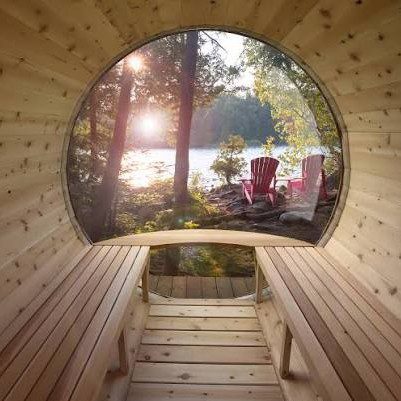
Panoramic windows: Some barrel and cabin saunas are designed with larger windows or glass panels, so you can enjoy your backyard view even while you’re inside. This is especially appealing in wooded or scenic properties.
Porch or changing area: Many outdoor sauna designs include a small covered porch or vestibule. This acts as a place to cool down between sessions, store towels and accessories, or simply enjoy a few quiet minutes of fresh air without fully stepping back into the cold.
Zinc-coated roofing: In Canada, a sauna’s roof needs to handle snow load, freeze-thaw cycles, and sustained moisture. Zinc-coated roofing is a practical, durable choice that protects the structure season after season.
Electric vs. wood-burning heaters: Both options have their advocates. Electric heaters are convenient and easy to control, letting you preheat your sauna remotely or on a timer. Wood-burning heaters offer a more traditional experience with a slower, more ritualistic heat-up process that some people strongly prefer.
Placement and Outdoor Design
Where you put your sauna shapes how much you use it and how much you enjoy it. Here are a few things to think about:
Privacy: Most people want their sauna to feel like a retreat, which usually means some degree of separation from neighbors and sightlines. Fencing, landscaping, and careful positioning can create a genuinely private outdoor sanctuary.
Access from the house: The closer your sauna is to a back door, the more likely you are to use it regularly, especially in winter. Having to cross a long, cold yard in a towel gets old fast.
Ground surface: Outdoor saunas need a stable, level base. A concrete pad is the most durable option, but compacted gravel or a well-built deck can work too.
Drainage and ventilation: Water from rinsing and condensation needs somewhere to go. Proper ventilation inside the sauna is also important for air quality and longevity of the wood.
Sauna Maintenance: What to Expect
One of the things people appreciate most about saunas is the relatively light maintenance burden. There’s no chemistry to balance, no filter system to manage. But there are still a few regular tasks that keep your sauna in great shape.
After Each Use
- Leave the door open briefly to let moisture escape and the space air out.
- Wipe down benches if needed.
- Allow the sauna to cool completely before closing it up.
Weekly or Regular Care
- Sweep or brush out any debris.
- Inspect benches and flooring for any signs of moisture damage or mold, particularly in humid seasons.
- Wipe down surfaces with a damp cloth as needed. Avoid harsh chemical cleaners, which can damage the wood and affect the smell of your sauna.
Seasonal Care
- Spring: Inspect the exterior for any winter damage, check roof and seals, clean the interior thoroughly.
- Fall: Check the heater and electrical connections before heavy winter use, inspect the roof and weatherproofing, ensure drainage is clear.
Wood Care
Cedar is naturally resistant to moisture and decay, but it still benefits from occasional attention. Some owners apply a sauna-safe wood treatment to exterior surfaces every few years. Interior wood should be left untreated as sealants and varnishes can release fumes when heated
Sauna Stones
If your sauna uses a traditional rock heater, inspect the stones periodically. Cracked or degraded stones should be replaced, as they can affect heat distribution and even shatter when water is poured on them. Replace sauna stones roughly every one to two years depending on use.
Heater Maintenance
Electric heaters are generally low maintenance, but you should check connections periodically and keep the stone bed free of debris. Wood-burning heaters need the flue and chimney cleared regularly, just like any wood-burning appliance
Enhancing the Experience
Earlier we mentioned that there are a number of accessories that can transform a basic sauna session into something genuinely special. Here are the essentials most owners end up with:
Sauna stones (kiuas stones): The rocks used in traditional heaters aren’t just any rocks. They need to handle extreme heat and rapid temperature changes without cracking. Good sauna stones make a real difference in how the heat feels.
Ladle and bucket: For pouring water over the stones to create steam (löyly). This is a central part of the traditional Finnish sauna experience. A wooden ladle and cedar bucket are the classic choice.
Sauna thermometer and hygrometer: Knowing the temperature and humidity inside your sauna lets you dial in exactly the experience you want.
Backrests: Angled wooden backrests make long sessions much more comfortable, letting you lean back rather than sitting upright on a flat bench.
Towels and sauna pillows: A proper sauna towel (larger than a standard bath towel) and a small sauna pillow for lying down complete the setup.
Aromatherapy: Essential oils, usually birch, eucalyptus, or pine, can be added to water before pouring over stones. The scent fills the room and adds another dimension to the experience.
Outdoor lighting: If you use your sauna in the evenings (and many people do), exterior lighting makes the whole backyard setup more inviting.
Steps or decking: A small set of steps or a decking platform around the sauna entrance improves safety and aesthetics, especially in winter.
How to Use a Sauna: Tips for Getting the Most Out of Every Session
Whether you’re brand new to saunas or just want to make sure you’re doing it right, these tips will help you get the full benefit safely.
- Preheat properly
A traditional sauna needs time to reach temperature (usually 30 to 45 minutes). Don’t rush it. The bench and walls should be warm to the touch before you step in. - Shower first
A quick rinse before entering keeps the sauna cleaner and opens your pores. - Start slow
If you’re new to saunas, begin with shorter sessions at lower positions (heat rises, so the upper benches are significantly hotter). Ten to fifteen minutes is a reasonable starting point. - Stay hydrates
You’ll sweat significantly. Drink water before, during, and after your session. Avoid alcohol before or during sauna use. - Cool down between rounds
Traditional sauna culture involves multiple rounds of heat separated by cool-down periods. This may include stepping outside, taking a cool shower, or simply sitting in fresh air. This cycle of heat and cooling is where much of the physiological benefit comes from. - Don’t overdo it
Most sessions are 15 to 30 minutes per round, with two to three rounds being common. Listen to your body. Lightheadedness, nausea, or an uncomfortable heart rate are signals to cool down. - Consult your doctor if needed
Sauna use is generally safe for healthy adults, but if you have cardiovascular conditions, are pregnant, looking to get pregnant, or have other health concerns, check with a healthcare provider before starting a regular sauna routine.
Is a Sauna Right for You?
A sauna is a meaningful investment, and it’s worth being honest with yourself about whether it fits your lifestyle.
The people who get the most out of sauna ownership tend to be those who are already drawn to wellness habits, who enjoy quiet time for rest and recovery, or who use their outdoor space regularly.
If you already love spending time in your backyard, whether it’s in a hot tub in the spring, on a deck in the summer, around a fire in the fall, or watching snow fall in the winter, a sauna fits naturally into that lifestyle.
It’s also worth thinking about who will use it. A two-person barrel sauna suits couples or solo users who want a personal retreat.
Families or people who entertain frequently might want a larger cabin-style model with more bench space.
FAQs
If you’re still wondering about whether it’s time to buy a sauna or not, here are some questions we hear a lot from our customers:
Can I use my sauna year-round?
Yes. This is one of the main benefits of outdoor sauna ownership in Canada. A properly built, well-insulated sauna performs beautifully in winter, and many users consider the cold-weather experience to be the best of all.
How long does a sauna last?
With proper care, a quality cedar sauna can last 20 years or more. The wood exterior weathers naturally over time, but the structural integrity and function hold up well when the sauna is maintained properly.
Do I need a permit to install a sauna?
Requirements vary depending on the installation type and location. It’s always worth checking with your local building laws before installation, particularly for structures with electrical connections or those attached to your home.
Is sauna use safe for everyone?
Generally yes for healthy adults. People with certain cardiovascular conditions, low blood pressure, or those who are pregnant should consult a doctor first. Children should use saunas at lower temperatures and for shorter durations.
What’s the difference between a barrel sauna and a cabin sauna?
Both deliver traditional Finnish dry heat. Barrel saunas heat up faster due to their curved shape and tend to feel cozier. Cabin saunas typically offer more interior space and a design that blends more naturally into a backyard setting. The right choice depends on your space, aesthetic preferences, and how you plan to use it.
Ready to Find Your Sauna?
At Kerr Splash, we carry a curated selection of quality outdoor saunas, including barrel and cabin styles built right here in Canada from premium western red cedar.
Our team will help you choose the right model for your space, handle delivery and installation, and support you with everything you need to keep your sauna in excellent shape for years to come.
We offer flexible financing options, lifetime warranties, and the kind of service that doesn’t end at the point of sale.
.